Showing posts with label Peer Feedback. Show all posts

Sunday, February 21, 2016

Merging STEAM/STEM with Social Studies

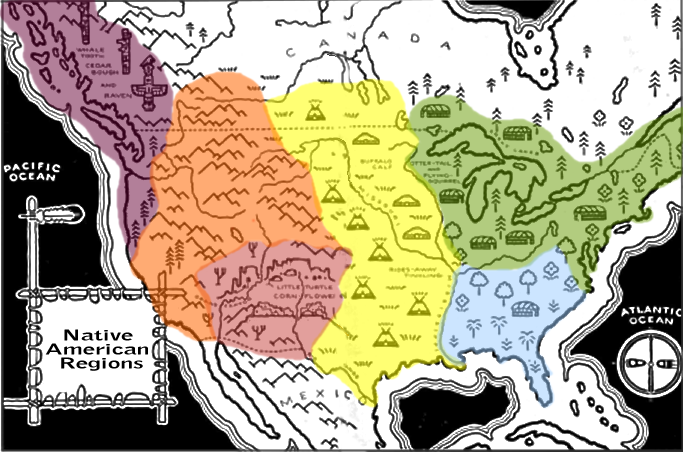
In our Social Studies curriculum students learn about the different Native American Cultural Regions, but students had a hard time internalizing and understanding the big ideas. To help students empathize with Native Americans and better understand how Native Americans relied on resources and adapted to their environments, they really needed a hands-on experience.


Here's how it went! 

We defined natural resources and I showed them a map of the United States. We discussed what we knew about the natural resources that can be found in these areas as well as possible environmental challenges. 

I then revealed that we were going to be designing a house to withstand these environmental challenges using only natural resources available. 

Cue the party music.


I split students into each Native American Cultural Region group and allowed them to read about what resources they would have available to them as well as which environmental challenges they would have to learn to adapt to. 
Purchase HERE!

I showed them the spread of goodies they would get to use: 


Please note that some of the materials don't resemble the natural resource (ie. tape = soil). The reason is that Native Americans used soil as an adhesive.   Also, if resources were "scarce," there was a limit to how much they could take, otherwise I did not limit them. 

AND...Cue the frustrations.

"WHAT?! We don't even get SOIL?!" 

"HEY! That group gets more resources than we do!!" 


Keep calm and use this as a teachable moment. 


Through this students will learn that based on where these Native Americans lived, they were limited to their surroundings. This helped them develop their culture. Plus, once students get to creating and problem-solving, they'll be all smiles. 


After students have ample amount of time to build, let them test! You can either have students come up with appropriate ways to test environmental challenges, or you can have tests pre-made. I had all materials sitting out which made testing pretty self-explanatory. 


After testing, provide students with time to share their designs with the class and reflect. Allow students to share feedback. An important part to the process is letting students actually make changes to their original design. Students should then go back and redesign then retest. I had students retest a different day. 


This lesson was not only a blast to do and watch, but students really did get the big ideas. We went to the museum later that month to see the Native American exhibit, and the connections made.....well...



Monday, November 9, 2015

How Students Turned MISTAKES into MASTERPIECES!

How students may respond to a "mistake" prior to this activity:


How students will respond to a "mistake" after this activity: 


Showing students that making mistakes is okay one thing, but embracing them and seeing them as opportunities is something that takes practice!

Here's how our students changed their mindset: 

Download the Beautiful Oops activity here. There is a primary and intermediate version. Below shows the intermediate version. 

  • We reflected on the message through some close reading
  • We looked at things differently. 
  • 5. ...Then got a second opinion (cough..peer feedback...cough). 
 
  • After...we got CREATIVE! We added details to make our "mistakes" beautiful. We shared our masterpieces with peers and received MORE feedback
  • FINALLY, we reflected on the experience. 
BAM. In one 45 minute lesson, students practice the following Genius Hour skills: peer feedback, planning, AND reflection...with a little sprinkle of creativity.

Students had a blast turning these doodles into masterpieces. It made some students really shine. Here are some "after" photos of examples of what students came up with!


This one is unreal. If you look at it like this, it's a wolf...

But cover up the other side, and it's a bird! So creative!! 


Thursday, September 24, 2015

How to Introduce Growth Mindset to your Intermediate Students

 For the first time ever, we decided to teach a lesson on Growth Mindset to our students! Here's how we went about it!

Read The Most Magnificent Thing


Simply do a read aloud and discuss her character traits, or if you have time try this AMAZING reading lesson that promotes creativity and incorporates planning and peer feedback! (Yay for getting those Genius Hour elements in!) 

Read About how the Brain Works

We used this article to teach students that the brain is like a muscle that needs to be worked! We had the class read the article aloud, then had students answer comprehension questions with a group. 

Make Connections Between the two and Create an Anchor Chart

We asked students to share character traits (and provide evidence) of the main character in the story. We then asked students to share the gist of the Brain is Like a Muscle article. We set that a mindset is like a belief, and that the character in The Most Magnificent Thing believes in the Growth Mindset, and the author of the other article does as well. Based on this, we asked students to define what a Growth Mindset is. 

We provided examples of something someone with a fixed mindset might say and how to change your wording to shift to a growth mindset. Students then provided their own examples of both fixed and growth mindset phrases.


To conclude the lesson, we directed students' attention to the posters hanging in the room. We said that students can use these as a reference and add to it throughout the year. 


Ba-da-bing, ba-da-boom, that's it! 

Wednesday, August 19, 2015

Genius Hour 20 Day Challenge - Day 19: Share!

Day 19: Share!


THIS IS THE BEST DAY!!!!


After students have had some time to work on how they are are going to share their learning, spend some class time SHARING! You and your students will see that all of this hard work was worth it! 

If you have students who have a different audience than the classroom, have them share what they did. We had a student who researched about different types of wolves. She found one species whose numbers were going down again after being taken off of the endangered species list. She wrote to the World Wildlife Federation with her research asking them to put this species back on the list. It was really neat to see her look beyond the classroom and figure out how she can make a difference for one of her passions. (Anddddd....it's also helpful for students to show other students how they find audiences outside of the classroom.)

Think about others that you may want to invite in for presentations - parents, administrators, other teachers, speech/language pathologists, and more! They can just pop in for a presentation or two. So neat!

Here are some of the cool projects that our students shared! Looking at these makes me SO excited to get this back up and running again!!


Tuesday, August 11, 2015

Genius Hour 20 Day Challenge - Day 11: Final Questions & Final Project Discussion

Day 11: Final Questions & Final Project Discussion


You're almost there!


After you have students use their critical friends to review the question, they will come to you for final approval. The purpose of this stage is to help students tweak their questions, if needed, to make them more accessible or to push students a little further.


Before: How do you care for a Dwarf Hamster? 
After: How do you care for a Dwarf Hamster? How can we share this information with other kids who want to adopt a Dwarf Hamster?

Before: What are the different parts of the brain, and how do they work?
After: What are the different parts of the brain, and how do they work? How can I strengthen them?

Before: How can we learn new magic tricks?
After: How can we learn new magic tricks and create a show with everyday objects?


When we give advice to students, we ask them different questions to guide them into doing something with the information whether it's creating, sharing for a specific audience, modeling, or designing. For Genius Hour, we don't want our students to just regurgitate the information. We want them to DO something with the information that they get.

Try asking your students some of these questions to help them make their questions even stronger:
  • What will do or make with the information that you gather?
  • Who might be interested in learning about your research? How can you share this with them?
  • How can you show your learning?
Your students will be at different places. For some, coming up with the question will be easy-peasy. For those who get it right away, send them to do some pre-searching to get some basic information. for others, it will require some more prompting and questions.

Once everyone has their questions ready to do, you will notice a change in your step. Suddenly, you'll want to throw on your sunglasses and STRUT YOUR STUFF.


Monday, August 10, 2015

Genius Hour 20 Day Challenge - Day 10: Critical Friends

Day 10: Critical Friends


A critical friend is someone who is encouraging and supportive, but who also provides honest feedback. Critical friends provide feedback that is constructive and will help make your question/project/paper/speech even BETTER. Let's face it, critical friends can be your best friends!

If you have not seen the video, Austin's Butterfly, do yourself a favor and watch it now! This is a WONDERFUL video to show your kids, too, about how feedback can make our projects even better!


Image result for CRITICAL friend meme

We need critical friends who "keep it real." If your class is used to mainly giving positive feedback like "I like how Susie Snowbucket described the hamburger-it made me hungry" or "I like how Johnny Lunchbox started his paper with a question-it made me want to keep reading"....then you may want to do an activity or two like the ones below...


Alright, so now your friends are ready to "keep it real..."

After your students have developed their own inch, foot, and yard questions, they will pick one of the yard questions as their draft research question. Here's the form we use. 

Students will write draft research question at the top of the page. Independently, they should go down the list of questions on the sheet. If ANY of the answers are yes, then they should tweak their question until they get all no's. Then...it's time for that critical friend.


The critical friend will write his/her name on top of the chart and then provide feedback for each of the questions. 
Sometimes, kids hit it out of the park right away...other times, they need another shot at it.
It's okay! Just do it again...

When students are ready, they will come to you to get final approval. Some may need a tweak here or there...


It takes teamwork!


Friday, July 31, 2015

Genius Hour 20 Day Challenge


Two years ago we piloted a program (in our district referred to as Personalized Learning), but many refer to it as Genius Hour, Passion Projects, 20% Time, or any combination of those words combined. To stay consistent, we'll refer to it as Genius Hour, because that's what we're seeing used most frequently in the Social Media world -- but it's all very similar!

So...what is Genius Hour/Passion Projects/20% Time?! Genius Hour is where passions come alive! Students are given the opportunity to pose their own questions, problems, or challenges. With support, students will plan, manage, and reflect upon their learning. Students will switch roles from learner and teacher throughout the process. They will have the freedom to think independently and interdependently, take risks, and learn from their attempts. You and your students will not be able to get enough of it!

Follow along in this 20 day challenge to see one way to implement Genius Hour this school year! The goal is to work students up to independence. We'll be posting one post per day for 20 days!

These posts will include online resources, student examples, TpT Freebies, and MORE! Please feel free to ask questions and share your experiences! I'm looking forward to making my Genius Hour even more successful this year! 

"Since my first year teaching I've dabbled in Genius Hour components, but it wasn't till last year's pilot that I felt really good about what I was doing with these students. Why?? Because this is a new way of thinking for this kiddos, and you have to gradually work with them on this process! You can't expect to hand them a packet, and have them come up with something great. Feedback, collaboration, and scaffolding will get them there." 
- Lauren

Please note that this may take more than 20 days depending on how in-depth you get with the lessons.

Day 1: What is Genius Hour?
Day 2: Brainstorm Your Interests
Day 3: Website Evaluation
Day 4: Researchable Questions - Inch, Foot, or Yard?
Day 5: Bloom's Taxonomy and Research Questions
Day 6: Reflection Practice
Day 7:Searchable Words for Google
Day 8: A Lot, Some, Little Activity
Day 9: Question Drafts
Day 10: Critical Friends
Day 11: Finalizing Questions & Final Project Discussion
Day 12: Writing a Plan & Organization Tips
Day 13: Help Wanted Board
Day 14: Research & Problem Solving Minilesson
Day 15: Research & Setting Up an Interview
Day 16: Knowing When to Move On & Where Am I Board
Day 17: Conferring
Day 18: Creation Station & Video Tutorials
Day 19: Share!
Day 20: Genius Hour Self Evaluation