Showing posts with label Reflection. Show all posts

Sunday, February 21, 2016

Merging STEAM/STEM with Social Studies

In our Social Studies curriculum students learn about the different Native American Cultural Regions, but students had a hard time internalizing and understanding the big ideas. To help students empathize with Native Americans and better understand how Native Americans relied on resources and adapted to their environments, they really needed a hands-on experience.


Here's how it went! 

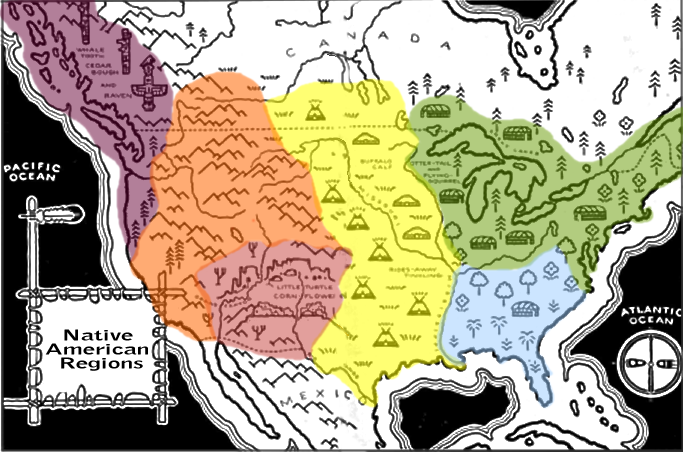
We defined natural resources and I showed them a map of the United States. We discussed what we knew about the natural resources that can be found in these areas as well as possible environmental challenges. 

I then revealed that we were going to be designing a house to withstand these environmental challenges using only natural resources available. 

Cue the party music.


I split students into each Native American Cultural Region group and allowed them to read about what resources they would have available to them as well as which environmental challenges they would have to learn to adapt to. 
Purchase HERE!

I showed them the spread of goodies they would get to use: 


Please note that some of the materials don't resemble the natural resource (ie. tape = soil). The reason is that Native Americans used soil as an adhesive.   Also, if resources were "scarce," there was a limit to how much they could take, otherwise I did not limit them. 

AND...Cue the frustrations.

"WHAT?! We don't even get SOIL?!" 

"HEY! That group gets more resources than we do!!" 


Keep calm and use this as a teachable moment. 


Through this students will learn that based on where these Native Americans lived, they were limited to their surroundings. This helped them develop their culture. Plus, once students get to creating and problem-solving, they'll be all smiles. 


After students have ample amount of time to build, let them test! You can either have students come up with appropriate ways to test environmental challenges, or you can have tests pre-made. I had all materials sitting out which made testing pretty self-explanatory. 


After testing, provide students with time to share their designs with the class and reflect. Allow students to share feedback. An important part to the process is letting students actually make changes to their original design. Students should then go back and redesign then retest. I had students retest a different day. 


This lesson was not only a blast to do and watch, but students really did get the big ideas. We went to the museum later that month to see the Native American exhibit, and the connections made.....well...


Thursday, August 20, 2015

Genius Hour 20 Day Challenge - Day 20: Genius Hour Self-Evaluation

Day 20: Genius Hour Self-Evaluation


Okay...so maybe that's not what you want your students to do. Self-Evaluation is an important part of the process.

The process. The process is the most important part of Genius Hour. Sure, you want your students to come up with a great final project that they are proud of, but it's more important that students get better and better at learning how to learn. This is how you help them be successful in their future in education, careers, and in life! They need to know how to pull out key information, skim/scan, take notes, organize and re-organize learning, synthesize, and share! They also need to practice Habits of Mind like Persisting and Communicating with Clarity and Precision.

So...how do we assess Genius Hour? Well...students get a LOT of feedback from their peers and their teachers to help them improve throughout the process. At the end, we have students do a Self-Evaluation. You could use one of the formats below OR work with your students to come up with a self-evaluation form for your class to use.


   Check out some of our self-evaluations here!

   I would encourage you to use scales in your self-evaluation (YES!    The kids will need MODELING for this!) After doing Genius
   Hour a few times, we started having students fill this out at the
   beginning of an experience and at the end (they also had to provide    evidence - hey Common Core!). It was so exciting for students to
   reflect upon the process and have a visual for how much they felt      they had grown!


Winner gets to select one product from our store for FREE!


a Rafflecopter giveaway

Wednesday, August 19, 2015

Genius Hour 20 Day Challenge - Day 19: Share!

Day 19: Share!


THIS IS THE BEST DAY!!!!


After students have had some time to work on how they are are going to share their learning, spend some class time SHARING! You and your students will see that all of this hard work was worth it! 

If you have students who have a different audience than the classroom, have them share what they did. We had a student who researched about different types of wolves. She found one species whose numbers were going down again after being taken off of the endangered species list. She wrote to the World Wildlife Federation with her research asking them to put this species back on the list. It was really neat to see her look beyond the classroom and figure out how she can make a difference for one of her passions. (Anddddd....it's also helpful for students to show other students how they find audiences outside of the classroom.)

Think about others that you may want to invite in for presentations - parents, administrators, other teachers, speech/language pathologists, and more! They can just pop in for a presentation or two. So neat!

Here are some of the cool projects that our students shared! Looking at these makes me SO excited to get this back up and running again!!


Sunday, August 16, 2015

Genius Hour 20 Day Challenge - Day 16: Knowing When to Move On & Where I Am Board

Day 16: Knowing When to Move On & Where I Am Board


To help understand where each student or group is in the process, I leave this Mimio document posted during Genius Hour time.

Students drag their name and put it in the appropriate stage. I'm sure to point out to students that some groups may be further along than others, or go back and forth between stages (which is FINE). Some projects require more creation, while some require more research. Some benefit from an interview, while others can skip a step! This simple management strategy helps keep students stay motivated and on track, and it helps the teacher understand who may need some additional support. You don't need a Mimio to do this! A FREEBIE printable version that would work just like a behavior management board (with names on clothespins). You can use chart paper and post-its or make a chart on your computer. This was a quick visual for us to see who needed more help and who was ready to move on.

Your chart may be as simple as this:

Researching                                 Interviewing                        Working on Final Project


At this point you are running to the finish lineeeeee. Almost.There.

Image result for boxer puppy excited
YESSSSSS!!!!

After students have had some time to research/interview/tinker/etc., we have some students are start to get near the end. This is a time that we do a mini-lesson about Knowing When to Move On. 

Mini Lesson # 6: Knowing When to Move On
  • Read through your RESEARCH question or step. 
  • Think about the information you just gained, and if you've answered your question.
  • If you have, move on. If you haven't, think about what you're missing. 

We have students go back and make sure that they have answered their questions. The first time we did Genius Hour, we skipped this step....PSA: DO NOT SKIP THIS STEP!!! Students need the time (and a reminder!) to make sure that they are answering their questions.

Using our Google Site (check out the bundle here) makes things so easy! By having everything in one place, it helps the students stay organized AND YOU stay organized! At the bottom of their Documentation/Notes pages, we have students copy and paste their question at the bottom. Then, they write a short paragraph answering their question. If they have trouble using their research/interviews/notes to answer their questions, then they may need to do some more research. 

Thursday, August 6, 2015

Genius Hour 20 Day Challenge - Day 6: Reflection Practice


Day 6: Reflection Practice

Reflecting about the process and being metacognitive is an important part of the process. From the beginning of the year, I had students blogging and reflecting about their learning and their classroom behavior. This really helped them be more thorough in their Genius Hour reflections. Go to Lauren's Teachers Pay Teachers store to download this FREEBIE

You could also go to Kristin's TpT store to get this FREEBIE of Self-Reflection Starters.


If reflecting isn't a regular part of your day, at this point we recommend getting your students to start reflecting about the Genius Hour process. Don't expect in-depth, eye-opening, life changing realizations the first few reflection experiences. Many of the reflections at first was a lot like one of my favorite Bachelor contestant's response.


If you use a class blog like Weebly, KidBlog, or Edmodo, provide students with prompts such as: 
  • What was a challenge you faced today? How did you get through it?
  • What was something easy or enjoyable today? Why? 
  • What do you like or dislike about this step of Genius Hour? 
Keep the prompts fairly open-ended. If you feel that students aren't sharing enough, reply back with a follow up question.

Lauren here! Here are some examples of ways I incorporated reflection into my 4th grade classroom.

I had students revise their writing and reflect on the process.


Here's a reflection from a social studies primary source lesson.


At the end of the year, I had students share their plan for completing an at home volcano project, and then reflect on the process.


Friday, July 31, 2015

Genius Hour 20 Day Challenge


Two years ago we piloted a program (in our district referred to as Personalized Learning), but many refer to it as Genius Hour, Passion Projects, 20% Time, or any combination of those words combined. To stay consistent, we'll refer to it as Genius Hour, because that's what we're seeing used most frequently in the Social Media world -- but it's all very similar!

So...what is Genius Hour/Passion Projects/20% Time?! Genius Hour is where passions come alive! Students are given the opportunity to pose their own questions, problems, or challenges. With support, students will plan, manage, and reflect upon their learning. Students will switch roles from learner and teacher throughout the process. They will have the freedom to think independently and interdependently, take risks, and learn from their attempts. You and your students will not be able to get enough of it!

Follow along in this 20 day challenge to see one way to implement Genius Hour this school year! The goal is to work students up to independence. We'll be posting one post per day for 20 days!

These posts will include online resources, student examples, TpT Freebies, and MORE! Please feel free to ask questions and share your experiences! I'm looking forward to making my Genius Hour even more successful this year! 

"Since my first year teaching I've dabbled in Genius Hour components, but it wasn't till last year's pilot that I felt really good about what I was doing with these students. Why?? Because this is a new way of thinking for this kiddos, and you have to gradually work with them on this process! You can't expect to hand them a packet, and have them come up with something great. Feedback, collaboration, and scaffolding will get them there." 
- Lauren

Please note that this may take more than 20 days depending on how in-depth you get with the lessons.

Day 1: What is Genius Hour?
Day 2: Brainstorm Your Interests
Day 3: Website Evaluation
Day 4: Researchable Questions - Inch, Foot, or Yard?
Day 5: Bloom's Taxonomy and Research Questions
Day 6: Reflection Practice
Day 7:Searchable Words for Google
Day 8: A Lot, Some, Little Activity
Day 9: Question Drafts
Day 10: Critical Friends
Day 11: Finalizing Questions & Final Project Discussion
Day 12: Writing a Plan & Organization Tips
Day 13: Help Wanted Board
Day 14: Research & Problem Solving Minilesson
Day 15: Research & Setting Up an Interview
Day 16: Knowing When to Move On & Where Am I Board
Day 17: Conferring
Day 18: Creation Station & Video Tutorials
Day 19: Share!
Day 20: Genius Hour Self Evaluation